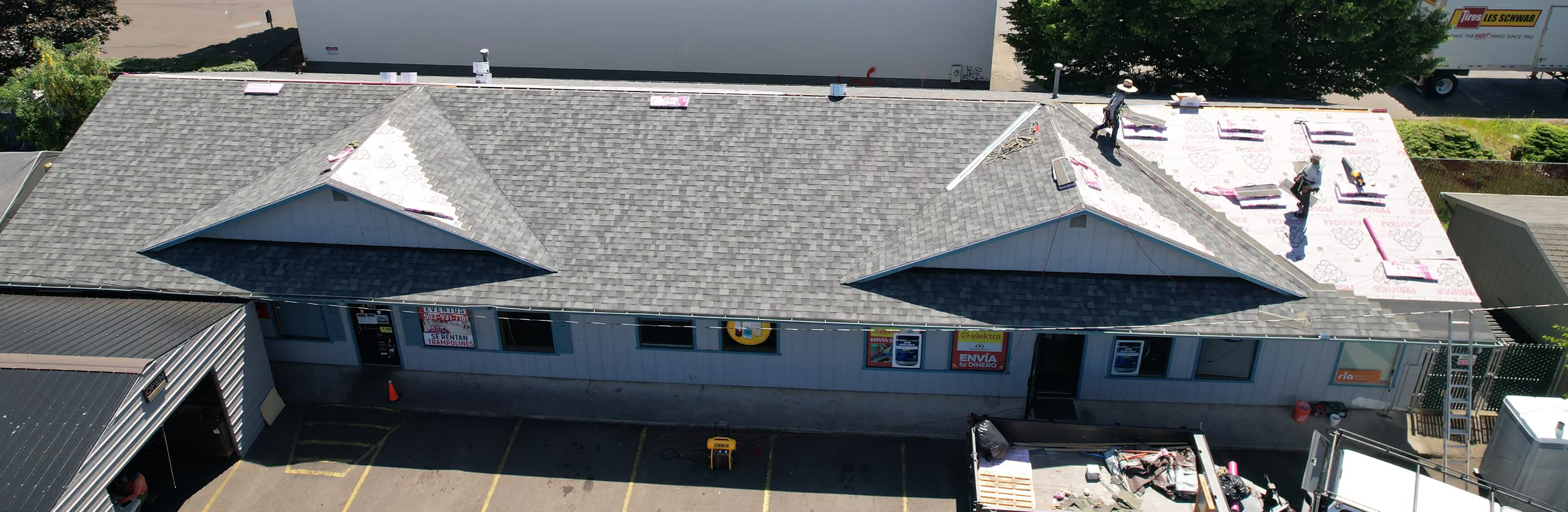
Why this decision is bigger than it looks.
Roofing material feels like it should be a simple choice: pick the one you like the look of, pick the one you can afford, done. But a roof is one of the few home systems that you'll likely only replace once, maybe twice, in the time you own a house. Get it right and you won't think about your roof again for two or three decades. Get it wrong — or get talked into the wrong material for your situation — and you're looking at a second replacement, or years of nagging repairs, well before you expected to.
Metal and asphalt are the two materials we install most often in Oregon, and we genuinely install both in roughly equal measure, because they solve different problems. This isn't a case where one is objectively better and the other is a compromise. It's a case where the right answer depends on your roofline, your timeline in the home, your budget structure, and how much you value predictability over upfront cost.
What each material actually costs, installed.
Pricing varies by roof complexity, pitch, and access, but as a general guide for a typical single-family home in our service area, asphalt shingle roofing tends to land in the range of $4.50–$7.50 per square foot installed, depending on shingle grade — three-tab at the low end, architectural or designer shingles at the high end. Metal roofing, specifically standing seam (the type we recommend for residential work over exposed-fastener panel systems), typically runs $9–$16 per square foot installed, depending on gauge, finish, and roof complexity.
On a straightforward 2,000 square foot roof, that puts asphalt somewhere in the $9,000–$15,000 range and metal somewhere in the $18,000–$32,000 range. That gap is real, and it's the single biggest reason homeowners default to asphalt without looking any further. But cost per square foot only tells you the entry price — it doesn't tell you the cost per year of service, which is where the comparison actually gets interesting.
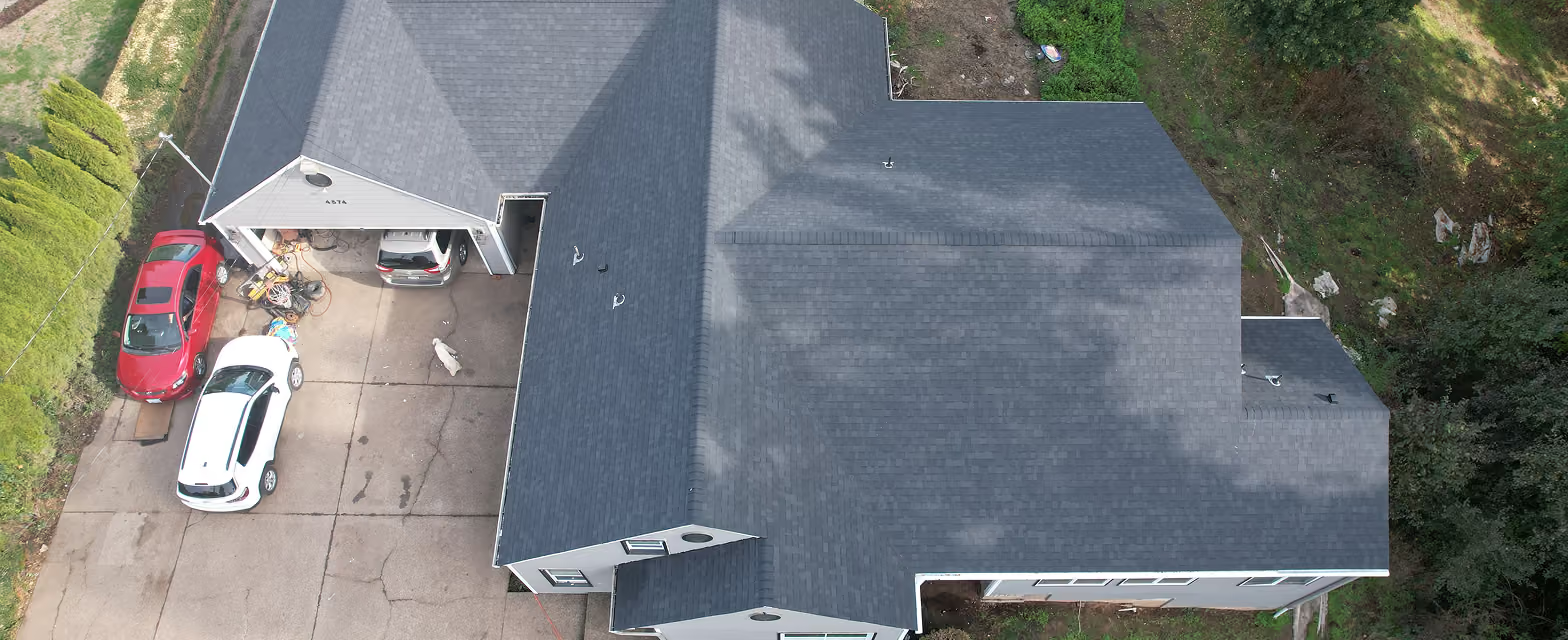
How each material handles an Oregon winter.
This is the part of the decision that's genuinely regional. A roofing material that performs beautifully in Arizona or Texas can behave very differently here, where the defining stress isn't heat — it's sustained moisture, moss, and the occasional windstorm off the coast.
- Asphalt sheds water fine when installed correctly, but granule loss accelerates faster in a climate with this much sustained wet weather, especially on north-facing or heavily shaded sections that never fully dry out between rains
- Moss and algae growth is significantly more aggressive on asphalt than on metal, because moss needs a rough, porous surface to establish itself — asphalt granules provide exactly that
- Metal's smooth surface sheds moss spores and debris far more effectively, which is a major reason we see far fewer moss-related service calls on metal roofs
- In wind events, correctly installed standing seam metal has a meaningfully higher wind uplift rating than asphalt shingles, which matters more than most homeowners realize during the occasional Pacific windstorm
- Snow load is rarely a major factor in most of our service area, but where it does occur, metal sheds snow far faster than asphalt, reducing prolonged weight on the structure
Maintenance: what you're actually signing up for.
Every roof needs some maintenance. The honest difference is in frequency and what happens if you skip it.
- Asphalt roofs benefit from moss treatment every 1–2 years in shaded, damp areas, along with periodic gutter clearing and a visual check after major storms
- Skipping asphalt maintenance doesn't cause immediate failure, but it does shorten the roof's effective lifespan — a 30-year shingle that's neglected can functionally perform closer to a 20-year roof
- Metal requires very little routine maintenance beyond occasional debris clearing and checking fastener integrity on exposed-fastener systems (standing seam has concealed fasteners, which removes this concern almost entirely)
- Metal's main maintenance consideration is around penetrations — vents, chimneys, skylights — where flashing detail matters more than on asphalt, and where quality of original installation really shows over time
The homeowners who regret their roofing choice almost never regret the material itself — they regret not matching it to how long they actually planned to stay in the home.
Insurance, resale value, and the numbers nobody mentions.
A few financial factors get left out of most roofing conversations, and they can meaningfully shift the math.
Many insurance carriers offer a discount for Class 4 impact-resistant roofing, and metal roofing often qualifies more easily than standard asphalt. Depending on your carrier and policy, this can offset a portion of the cost difference over the life of the roof, though the discount amount varies enough that it's worth a direct conversation with your provider rather than assuming a specific figure.
On resale, metal roofing is increasingly treated as a selling point rather than a neutral feature, particularly in markets where buyers are aware of its longevity. That said, the resale premium is rarely enough on its own to justify the upgrade — it's a secondary benefit, not the main reason to choose it.
The number that matters most is cost per year of service. A $12,000 asphalt roof lasting 25 years costs roughly $480 per year in material and installation. A $25,000 metal roof lasting 55 years costs roughly $455 per year. Once you extend the timeline that far, metal often becomes the more economical choice — but only if you're actually in the home, or your family is, long enough to realize that value.
Which roofs are actually good candidates for metal.
We don't recommend metal for every home, and we'll tell you directly if we think asphalt is the smarter call for your situation.
- Homes where the owner plans to stay 15+ years and wants to stop thinking about roofing entirely
- Steep or complex rooflines where moss and debris collection has historically been a recurring problem
- Homes in more exposed, wind-prone locations
- Owners planning solar installation, since standing seam allows non-penetrating mounting systems that don't compromise the roof's watertight seal
- Homes where the resale positioning and insurance discount genuinely offset a meaningful portion of the cost gap
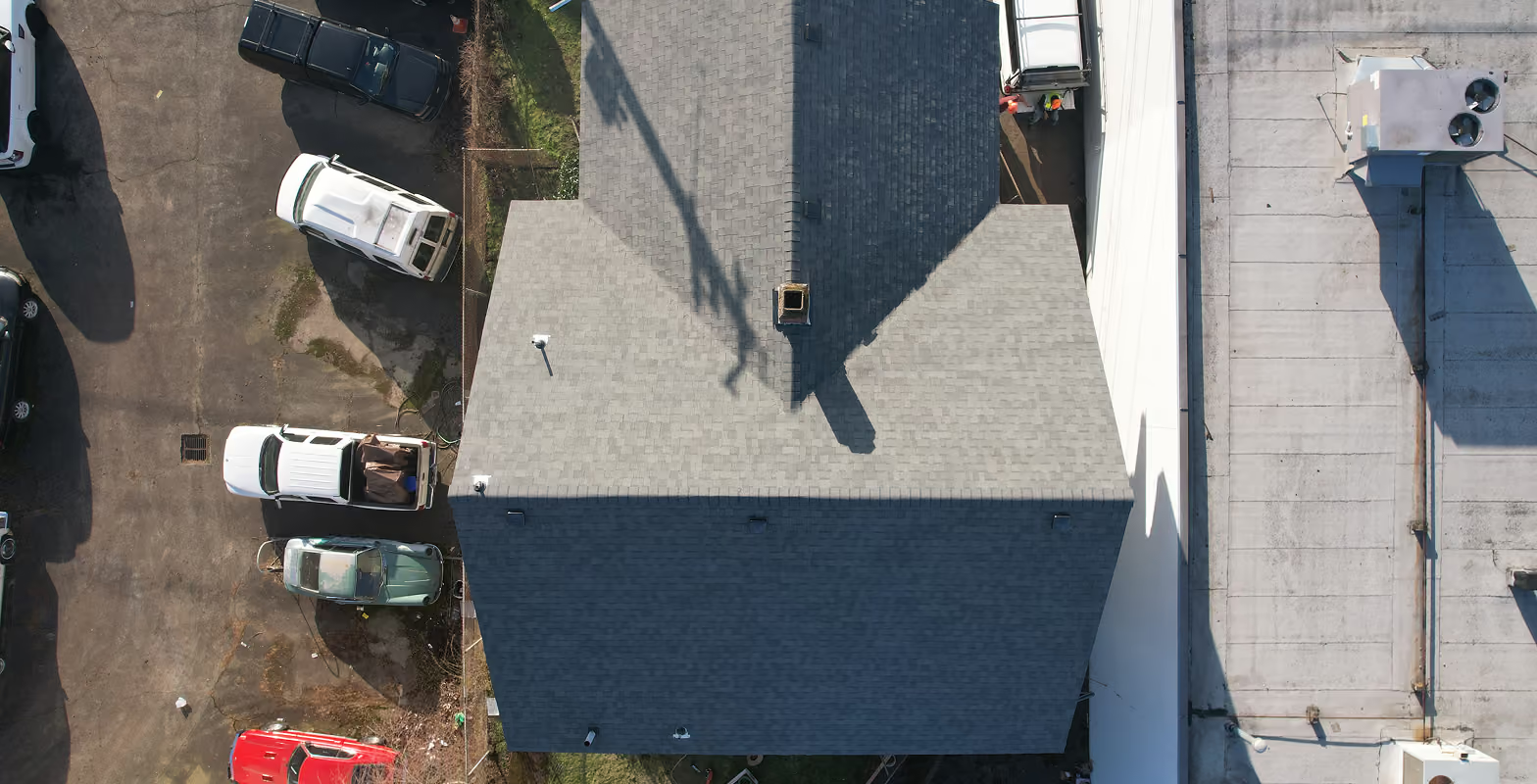
A framework for making the decision, not a sales pitch.
If you're planning to sell within the next five to ten years, asphalt is very likely the financially smarter choice, and we'll say so plainly during an inspection. If you're settling into the home long-term, dealing with a moss-prone roofline, or want to eliminate roofing as a recurring line item in your homeownership budget, metal starts to make a lot more sense — even with the higher upfront number.
What we won't do is default you toward whichever material has a better margin for us. During a free inspection, we measure your specific roof, walk your specific rooflines, and give you real installed pricing for both options side by side, along with an honest read on which one fits your situation — so the decision is based on your home and your timeline, not a generic recommendation.
In this article
Not sure about your roof?
We'll come out, take a look, and give you a straight answer
Ready to improve your building now?
Free on-site inspection. Straight answer. No obligation to proceed.
More from the blog
Other helpful articles
READY TO START?
Your project starts with a free estimate.
Tell us what you need. We'll come to you, assess the work, and give you a clear quote — no obligation, no pressure.