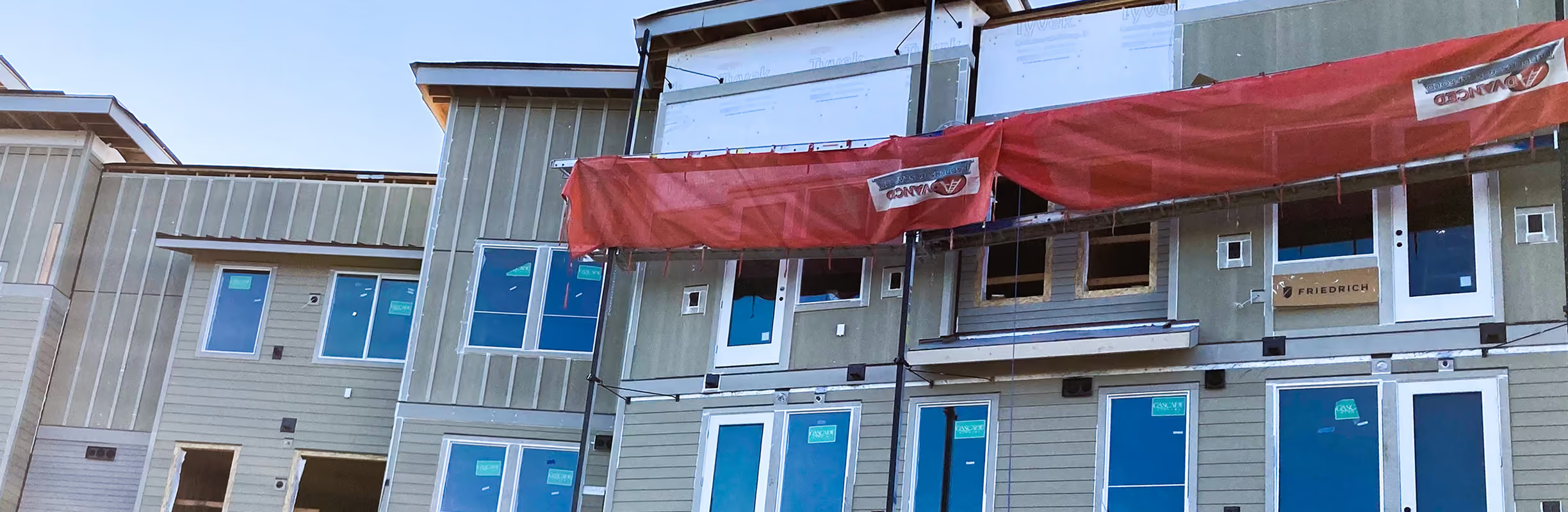
The choice that shapes the next 20-plus years of exterior maintenance.
Of every material decision in a siding project, fiber cement versus vinyl is the one that has the biggest downstream effect on how much time and money you'll spend on your home's exterior over the next two or three decades. Both are legitimate, widely used products. Both can look excellent on the right home. But they age completely differently, especially in a climate that spends a good chunk of the year wet.
We install both regularly, and the honest starting point is this: there's no universally correct answer. There's a correct answer for your specific home, your budget structure, and how long you expect to own it.
What the two materials actually are.
Vinyl siding is a PVC-based product, extruded into panels that interlock and are fastened over the home's sheathing and moisture barrier. It's been the dominant siding material in the U.S. residential market for decades because of its low cost and low maintenance relative to painted wood.
Fiber cement is a composite of cement, sand, and cellulose fibers, formed into planks or panels and typically factory-primed or fully finished. James Hardie is the best-known brand, though several manufacturers produce comparable products. It was developed specifically to address the durability weaknesses of both wood siding and vinyl.
Real installed cost, side by side.
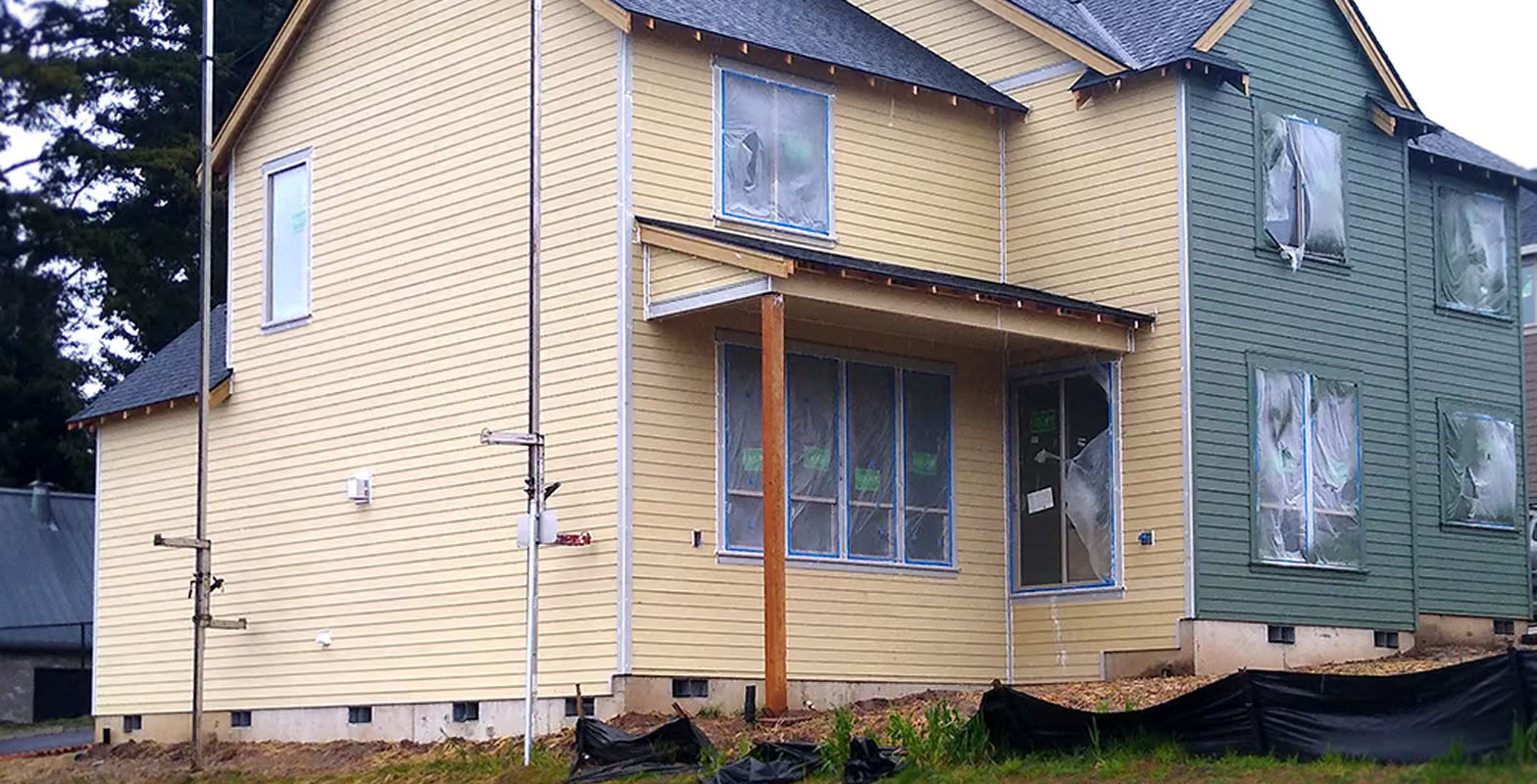
For a typical single-family home in our service area, vinyl siding generally runs $6–$11 per square foot installed, depending on panel style and thickness. Fiber cement typically runs $10–$18 per square foot installed, reflecting both higher material cost and more labor-intensive installation — fiber cement is heavier, requires specialized cutting tools, and generally needs field-painting or careful handling of factory-finished panels to protect warranty coverage.
On an average 2,000 square foot exterior, that puts vinyl in the rough range of $12,000–$22,000 and fiber cement in the range of $20,000–$36,000. That's a meaningful gap, and it's the reason vinyl remains the default choice for a large share of siding projects.
How each one actually holds up against our weather.
This is where the comparison stops being about price and starts being about long-term performance in a specifically wet, temperature-swinging climate.
- Vinyl can become brittle in sustained cold and is prone to cracking on hard impact — a thrown ball, a ladder bump, hail in a bad year
- Vinyl expands and contracts more with temperature swings, which over many years can lead to visible warping, especially on south or west-facing walls with more direct sun exposure
- Fiber cement is essentially immune to moisture-driven warping, since it doesn't absorb water the way wood does and isn't affected by temperature swings the way vinyl is
- Fiber cement resists pest damage entirely — no concern about woodpeckers, carpenter ants, or rot, which remain a real issue for wood siding and, less commonly, for improperly flashed vinyl installations
- Both materials perform well against wind-driven rain when installed with correct flashing and a proper water-resistive barrier — installation quality matters more than material choice for this specific concern
Vinyl is a smart, practical choice for a lot of homes. Fiber cement is the choice for homeowners who genuinely don't want to think about their siding again for thirty years.
The maintenance reality over a 20-year window.
Vinyl's main selling point is that it never needs painting — the color is embedded in the material. That's true, and it's a real advantage. But vinyl does fade over time, particularly darker colors under direct UV exposure, and faded vinyl can't be repainted easily without specialized paint formulated to flex with the material. Cracked panels also need full replacement rather than patching, and matching an exact color on an older, sun-faded home can be difficult if the original run is discontinued.
Fiber cement holds its factory finish considerably longer — many manufacturers offer 15-year finish warranties — but when it does eventually need repainting, it takes and holds standard exterior paint extremely well, and touch-ups blend far more predictably than they do on vinyl.
Over a 20-year ownership period, a realistic maintenance comparison looks like this: vinyl requires essentially no scheduled maintenance but carries a real risk of panel replacement from impact damage or fading mismatch. Fiber cement requires one repainting cycle for most homes in that window, at a cost that's still typically lower than a full vinyl re-side would be if a significant portion of aged, faded panels needed replacing.
Resale value and buyer perception.
In our experience walking homes with real estate agents and appraisers, fiber cement is increasingly viewed as a premium exterior material, comparable to how granite countertops or hardwood floors are perceived inside the home. It won't single-handedly change an appraisal, but it does show up favorably in buyer impressions and in agent marketing language — "Hardie siding" is a phrase buyers recognize and associate with quality and low future maintenance.
Vinyl doesn't carry the same premium association, though it's not viewed negatively either — it's simply seen as standard, expected siding rather than an upgrade.
How we'd actually think about it for your home.
If your timeline in the home is five to seven years, or your budget is genuinely constrained, vinyl is a smart, honest choice — it will look good, perform reasonably well, and won't cost you anything in ongoing maintenance during a shorter hold. If you're planning to stay long-term, want the most durable option against our climate specifically, or are positioning the home for a stronger resale story down the road, fiber cement is very likely worth the higher upfront investment.
We'll walk your specific home, talk through your actual timeline, and give you real installed pricing for both materials so the decision is grounded in your situation — not in whichever product happens to be easier for us to install that month.
In this article
Not sure about your siding?
We'll come out, take a look, and give you a straight answer
Ready to improve your building now?
Free on-site inspection. Straight answer. No obligation to proceed.
More from the blog
Other helpful articles
READY TO START?
Your project starts with a free estimate.
Tell us what you need. We'll come to you, assess the work, and give you a clear quote — no obligation, no pressure.