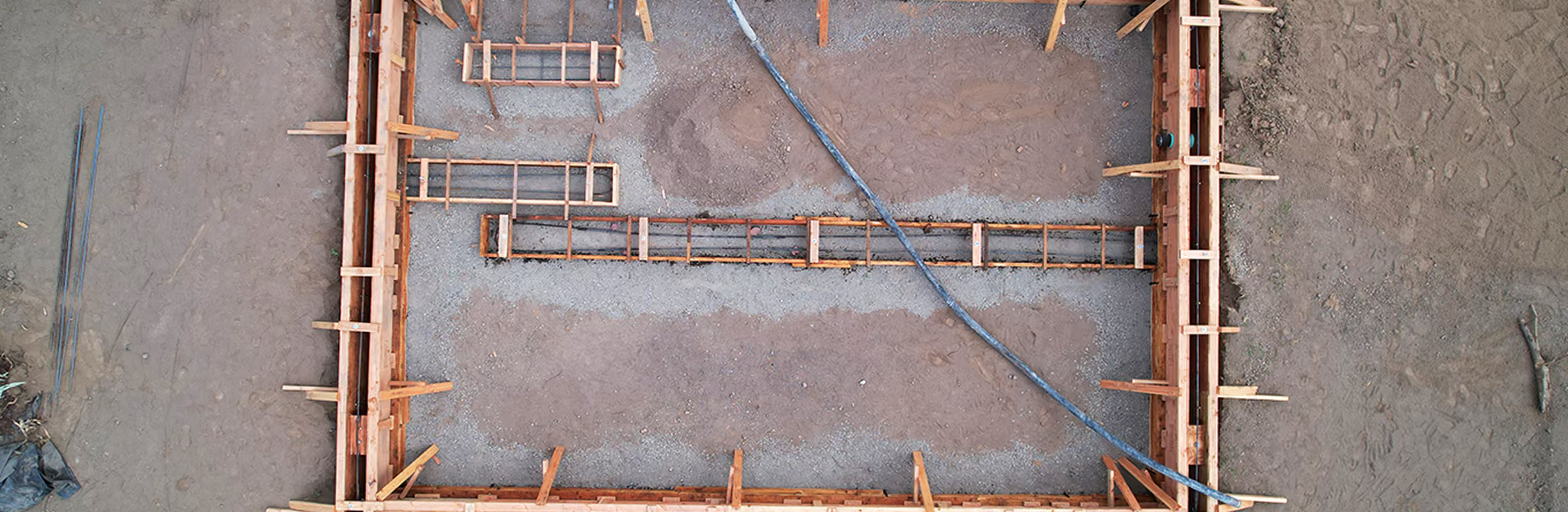
A comparison most homeowners never actually run properly.
"Building custom must be so much more expensive than just buying something" is one of the most common assumptions we hear from prospective clients, and it's usually stated with total confidence, before anyone has actually run the numbers. Sometimes that assumption holds up. Often, once you account for the full picture — not just the sale price of an existing home versus a construction budget, but everything that comes after closing in each scenario — the gap is much smaller than expected, and occasionally custom building comes out ahead.
This isn't a case for choosing one path over the other universally. It's a case for actually running your specific numbers before deciding, because the intuitive answer is frequently wrong in ways that matter.
The obvious comparison, and why it's incomplete.
The surface-level comparison looks simple: median existing home price in your target area versus estimated cost per square foot to build. But this comparison leaves out land acquisition cost and timeline for custom builds, and it leaves out renovation, deferred maintenance, and inefficiency costs for existing homes — and both of those omissions are large enough to flip the conclusion.
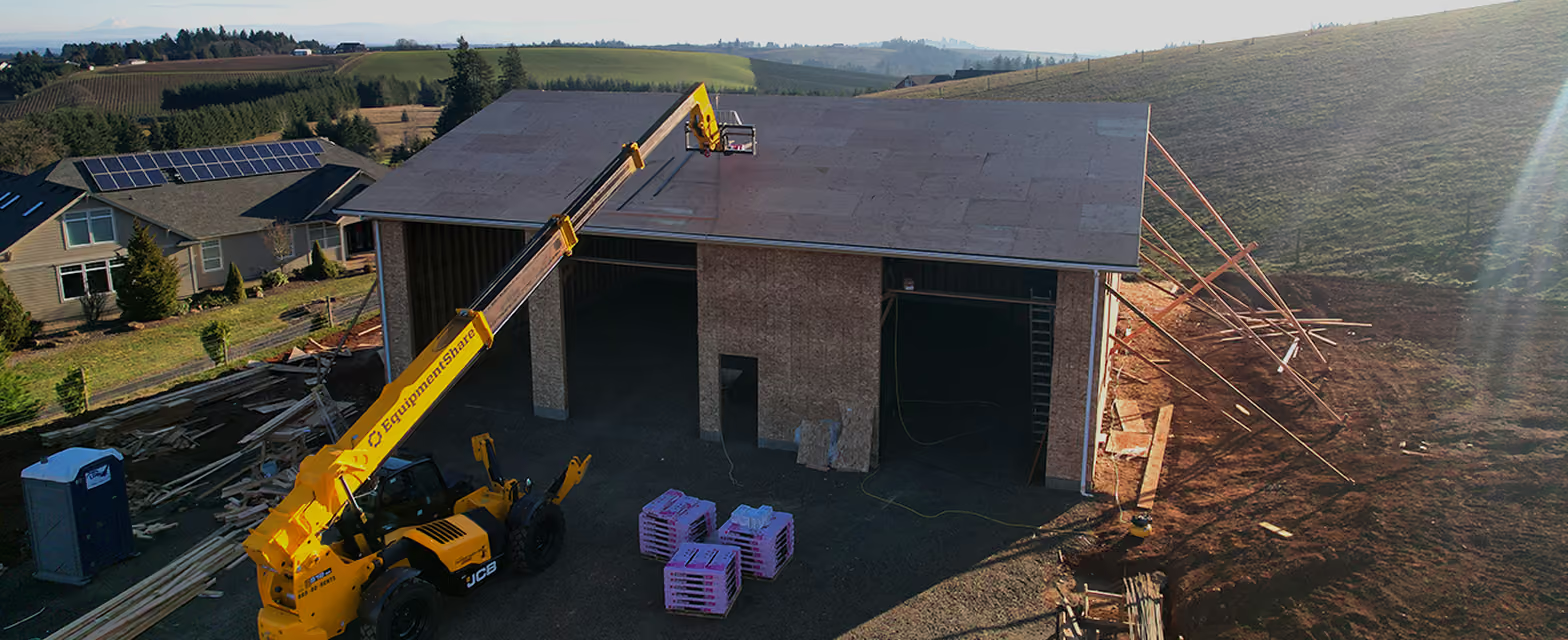
The real cost of buying existing, beyond the sale price.
Existing homes come with an invisible second budget that doesn't show up in the listing price, and it's the single most underestimated cost in this entire comparison.
- Most existing homes need some combination of updated systems — HVAC, electrical panel, water heater, roofing — within the first five years of ownership, especially in homes over 20 years old
- Inherited layout compromises, like a kitchen that doesn't work for how you actually cook, or a primary suite in the wrong location, often lead to a renovation within the first few years anyway
- Energy efficiency in older homes is frequently well below current building code standards, meaning higher ongoing utility costs for the life of ownership
- Inspection contingencies rarely catch everything — foundation issues, hidden water damage, and outdated wiring are common discoveries after closing, not before
- Closing costs, agent commissions, and immediate move-in repairs typically add 3-6% on top of the purchase price before you've done any intentional updates
The real cost of building custom, beyond the construction budget.
Custom builds have their own set of costs that are easy to underestimate if you're only looking at a per-square-foot construction number.
- Land acquisition, which varies enormously by location and can represent 15-30% of total project cost depending on the market
- Site work — clearing, grading, utility hookups, septic or sewer connection — which can add substantially to cost on undeveloped or challenging lots
- Permitting and design timeline, typically adding several months to a year before construction even begins
- Temporary housing costs during the build if you're not already settled elsewhere
- Interest carrying costs on a construction loan during the build period, before it converts to a standard mortgage
Buying existing often means paying for someone else's choices, and fixing them later. Building custom means paying upfront for exactly what you actually want, on your own timeline.
Timeline: the factor that shapes everything else.
Buying existing is measurably faster — often 30-60 days from accepted offer to closing, with the home livable immediately, even if imperfect. Custom building realistically takes 10-18 months from land acquisition through final inspection, depending on permitting complexity and design scope. That timeline difference isn't just an inconvenience — it has real financial weight, since it means paying for temporary housing, storage, or a longer overlap between two housing costs.
For buyers with flexibility and no urgent timeline pressure, this trade-off is manageable. For buyers who need to be settled quickly — a job relocation, a growing family, a school district deadline — it can be the deciding factor regardless of the cost comparison.
Long-term value and how each path ages.
A custom-built home comes with modern building codes, current energy efficiency standards, and a builder's warranty covering workmanship and major systems for a defined period — typically translating into lower maintenance costs and fewer surprises in the first 5-10 years of ownership. An existing home's long-term value depends heavily on the age and condition of major systems at purchase, and on how well any inherited layout or finish compromises age with your actual needs over time.
Appreciation potential is harder to generalize, since it depends heavily on local market dynamics rather than construction method — but a well-located custom build, designed with resale flexibility in mind, tends to hold its value comparably to a well-maintained existing home in the same area.
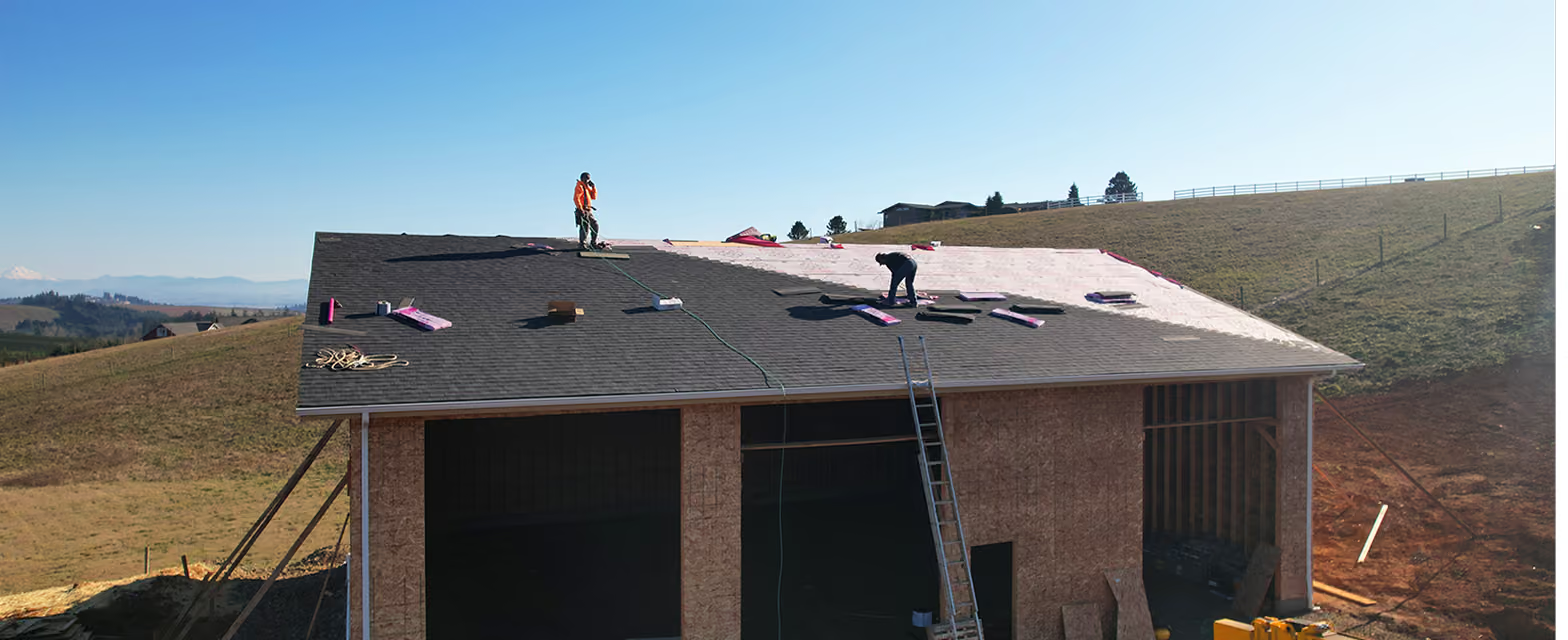
How to actually run this decision for yourself.
If timeline flexibility isn't a major constraint, and you have a specific vision for how you want to live in your home — not just what you're willing to accept — it's worth getting a real, itemized comparison rather than relying on the general assumption that custom is always pricier. If you need to move quickly, or you've found an existing home that already fits your needs with minimal compromise, buying existing is very likely the more practical path.
We can put together a realistic, line-by-line cost comparison based on your target area, lot options, and needs — including the hidden costs on both sides — so you're deciding based on real numbers rather than a general assumption either way.
In this article
Want to discuss your new construction?
We'll come out, take a look, and give you a straight answer
Ready to improve your building now?
Free on-site inspection. Straight answer. No obligation to proceed.
More from the blog
Other helpful articles
READY TO START?
Your project starts with a free estimate.
Tell us what you need. We'll come to you, assess the work, and give you a clear quote — no obligation, no pressure.