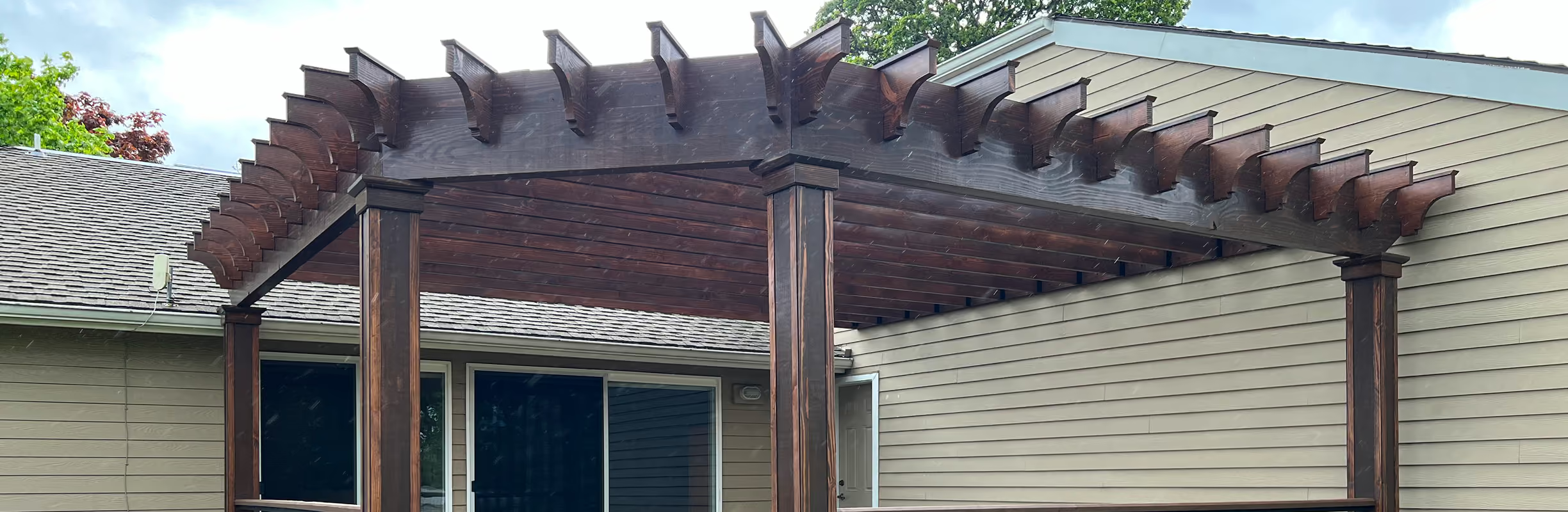
A decision that's easy to get wrong by only looking at the sticker price.
Almost every deck conversation we have starts with a homeowner quoting a price they saw online for composite decking and asking why it's so much more than wood. It's a fair question, and the short answer is that composite and wood aren't really the same product wearing different price tags — they're two different approaches to the same problem, and the sticker price only tells part of the story.
To make this comparison properly, it helps to actually break wood into its two common categories, since pressure-treated lumber and cedar perform quite differently from each other, before even getting to composite.
The three materials, briefly.
Pressure-treated (PT) lumber is the most affordable decking option, chemically treated to resist rot and insects. It's a workhorse material, but it requires the most ongoing maintenance of the three and has the shortest realistic lifespan in a wet climate.
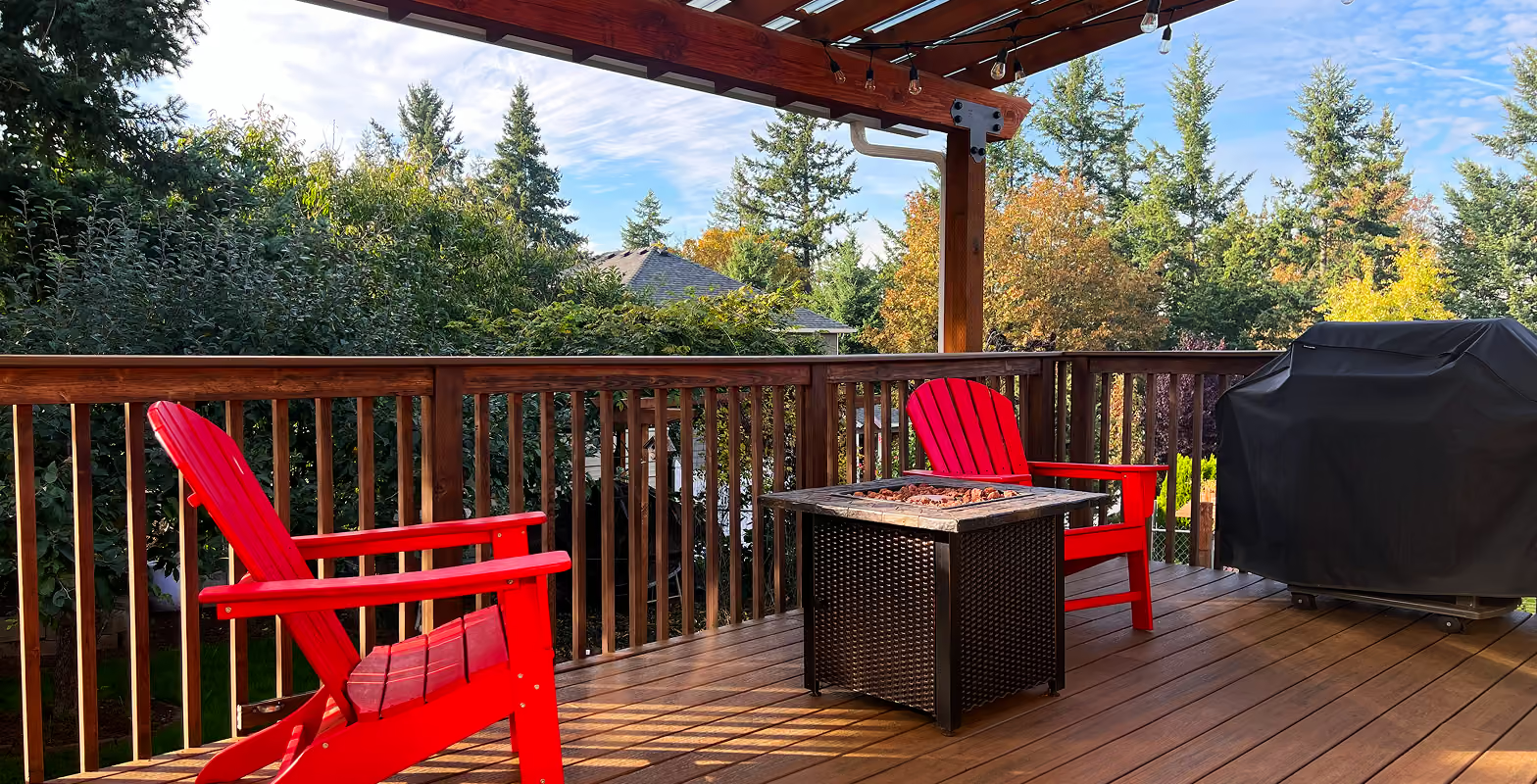
Cedar is a naturally rot-resistant softwood with a warmer appearance that many homeowners prefer aesthetically. It costs more than PT lumber but less than most composite options, and it ages beautifully if maintained, or turns gray and rough if neglected.
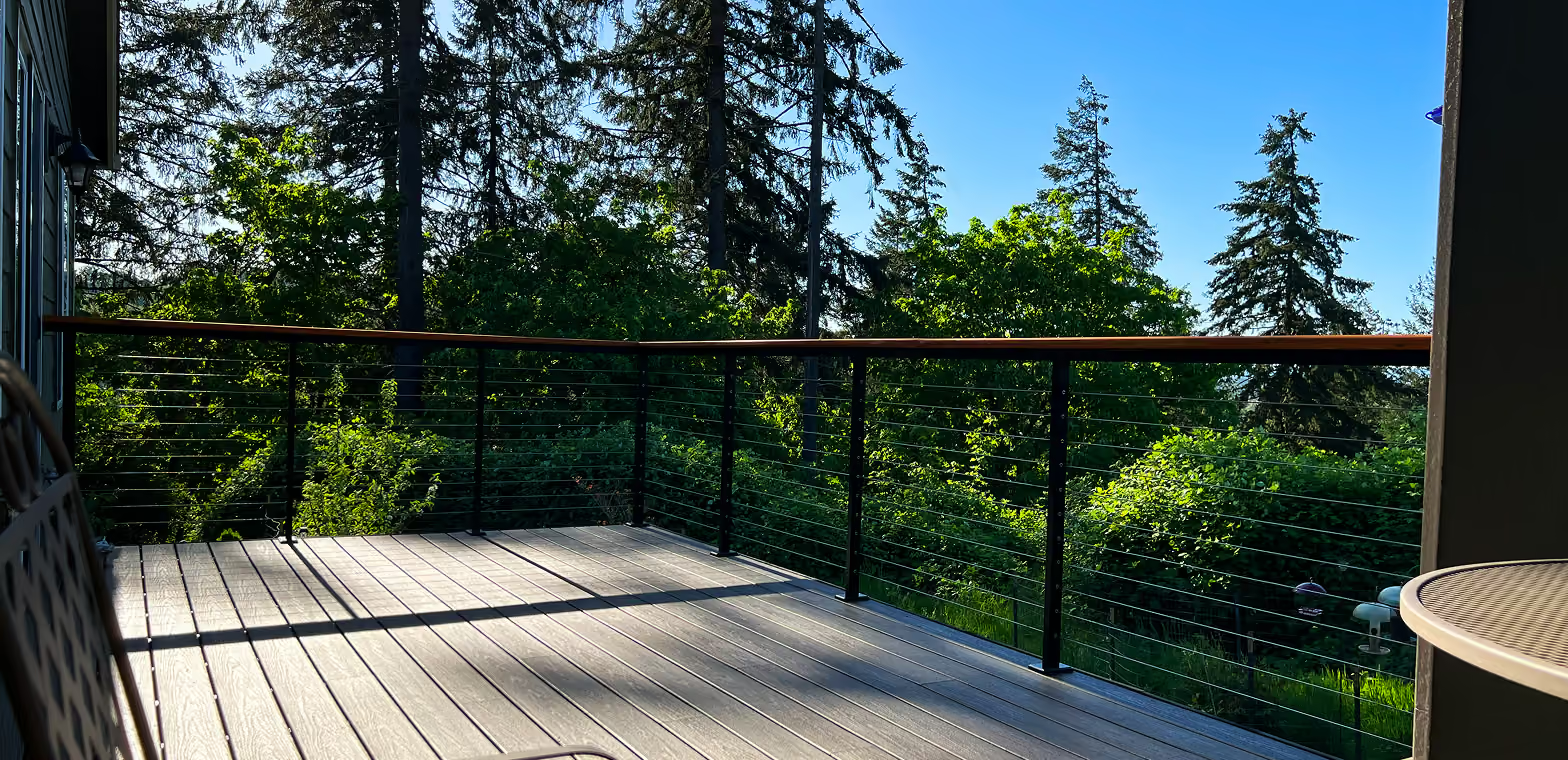
Composite decking is an engineered product, typically a blend of wood fibers and recycled plastic, either capped (with a protective outer shell) or uncapped. Capped composite, which is what we recommend and install almost exclusively today, is significantly more resistant to staining, fading, and moisture absorption than early-generation uncapped composite products from 15-20 years ago, which is worth knowing if your impression of composite comes from an older deck.
Real installed cost and what drives it.
For a typical mid-size deck in our service area, PT lumber decking generally runs $25–$40 per square foot installed, cedar runs $35–$55 per square foot installed, and capped composite runs $45–$70 per square foot installed, with the range in each category driven mainly by railing style, substructure complexity, and height off grade.
On a 300 square foot deck, that's roughly $7,500–$12,000 for PT, $10,500–$16,500 for cedar, and $13,500–$21,000 for composite. The composite premium is real and upfront — there's no getting around that. The question is what happens to that gap over the next 20 years.
The actual maintenance schedule for each material.
This is where the comparison changes shape, because maintenance cost and time are just as real as the initial installation price, even though they don't show up on the same invoice.
- PT lumber needs sealing or staining every 1–2 years to maintain water resistance, plus periodic board replacement as sections inevitably split, cup, or rot — typically starting within 8–12 years
- Cedar needs sealing or staining roughly every 2–3 years to maintain its color and moisture resistance; skipping this doesn't cause immediate failure but accelerates graying and surface checking
- Composite requires no sealing or staining at any point in its service life — occasional washing with soap and water is generally sufficient
- PT and cedar both require inspection of fasteners and structural framing over time, since ground-contact posts and joists are exposed to the same moisture cycles as the boards themselves
- Composite boards themselves don't need structural maintenance, but the framing underneath (unless also composite or specially treated) still requires the same attention as any deck substructure
Wood asks for a little of your time every couple of years. Composite asks for a bigger check upfront and almost nothing after — the honest choice is which trade-off actually fits how you want to spend your weekends.
The real 20-year cost picture.
Running the numbers over two decades changes the comparison meaningfully. A PT deck, factoring in installation, roughly ten sealing cycles, and at least one round of partial board replacement, often approaches or exceeds the upfront cost of composite by year 15–18. Cedar, with fewer maintenance cycles needed but a higher per-cycle labor cost for proper staining, lands somewhere in between. Composite, despite the higher day-one price, often ends up the most cost-effective option over a true 20-year hold once maintenance labor and materials are factored in — assuming you value your own time at any reasonable rate, or are paying a professional for maintenance work.
The math flips if you're not planning to stay in the home that long, or if you genuinely enjoy deck maintenance as a seasonal ritual rather than a chore — in which case the lower upfront cost of wood, paired with maintenance you don't mind doing, can make it the smarter practical choice.
Climate-specific considerations worth knowing.
A few performance factors matter more here than in drier climates.
- Composite handles sustained moisture exposure without warping or rotting, which is a meaningful advantage during our extended wet season
- Wood decking in heavily shaded, north-facing yards stays damp longer between rains, accelerating the maintenance timeline beyond the general estimates above
- Composite can become slightly more slip-prone than textured wood when wet and covered in moss or algae film — regular washing addresses this, but it's worth knowing if you have a shaded, low-airflow deck location
- Both materials benefit significantly from proper substructure ventilation and drainage, which affects longevity more than the surface material choice alone
How to actually decide.
If you're budget-conscious, plan to stay in the home for a shorter window, or enjoy the seasonal ritual of sealing and staining, wood — cedar in particular — remains a completely reasonable choice, and one we build often. If you want to eliminate deck maintenance from your annual to-do list and are thinking in a 15-20 year timeframe, composite is very likely worth the higher initial investment.
We build with all three materials regularly and don't have a default answer we push. During a consultation, we'll walk your specific yard, talk through sun exposure and drainage, and give you real installed pricing across materials so you're comparing actual numbers for your project rather than generic online estimates.
In this article
Want to discuss your outdoor living?
We'll come out, take a look, and give you a straight answer
Ready to improve your building now?
Free on-site inspection. Straight answer. No obligation to proceed.
More from the blog
Other helpful articles
READY TO START?
Your project starts with a free estimate.
Tell us what you need. We'll come to you, assess the work, and give you a clear quote — no obligation, no pressure.